
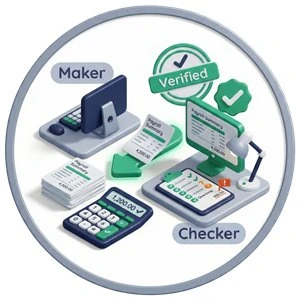
From monthly inputs to an approved payroll
| Step | What needs to happen |
|---|---|
| 1. Prepare | HR consolidates employee changes, attendance, leave and variable pay in the agreed format. |
| 2. Validate | Check missing fields, duplicate IDs, effective dates and approvals before calculation. |
| 3. Process | Calculate the payroll and prepare draft outputs using agreed rules and current applicable requirements. |
| 4. Review | Investigate unusual movements, reconcile totals and resolve open questions. |
| 5. Approve | The nominated client approver signs off a clearly identified payroll version. |
| 6. Release and close | Prepare the approved payment and reporting outputs, then record completion and outstanding actions. |
Three roles to agree
The preparer produces the payroll. A checker reviews the calculations and supporting changes. Your authorised approver makes the release decision. Agree the named people and their backups so a holiday or absence does not leave the cycle without an owner.
An approval should identify the payroll period, entity, version and totals. If an approved result changes, repeat the relevant checks and obtain approval for the revised output.
Handle exceptions without losing the record
Late changes need a reason, supporting evidence and a decision owner. Check payment deadlines and employee impact before deciding whether to rerun, arrange an off-cycle payment or include an adjustment in a later cycle. A cut-off is an operational control, not permission to delay legally due pay.
Keep the final records connected
- Approved inputs and employee changes.
- Final payroll register and explained variances.
- Client approval and the matching payment-file version.
- Statutory output and submission/payment evidence, where within scope.
- Outstanding corrections with an owner and next action.
Plan the sequence using our payroll calendar guide and onboarding checklist.