
Employee records ready for payroll
Agree the mandatory fields for each employing entity, including employee ID, employment dates, pay terms, bank details and applicable statutory identifiers. Collect only what is necessary through the agreed secure channel. Missing data should have an owner and resolution date.
Joiners and leavers
| Event | Payroll handover |
|---|---|
| New employee | Approved start date, pay components, work pattern, identifiers and bank information. |
| Salary change | Written approval, effective date and treatment of any backdated adjustment. |
| Resignation or termination | Confirmed final dates, approved settlement items and review of applicable clearance or withholding requirements. |
| Transfer | Old and new employing entity or department, effective date and balance/reporting treatment. |
Translate policies into usable instructions
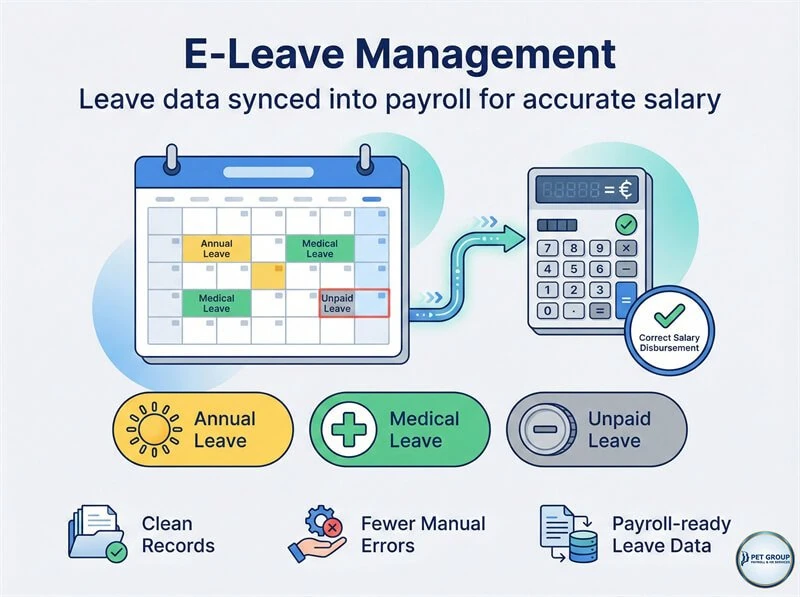
Document the eligibility, units, approval route and pay code for each allowance, overtime category and reimbursement. Leave policies need a clear link between approved absence and any payroll adjustment. Confirm the applicable country rules before configuring calculations; the same internal policy label may have different payroll consequences.
Keep approved policy versions and examples of how they apply. This gives managers a consistent basis for preparing inputs and helps resolve differences before payroll is finalised.
Define the service boundary
Payroll-linked administration can support records and operational handovers. Employment-law advice, disputes, recruitment and wider HR projects should be scoped separately. Your management team retains employment decisions and approval authority.
Explore HR advisory for broader policy work, or use our payroll handover checklist to prepare for a transition.