
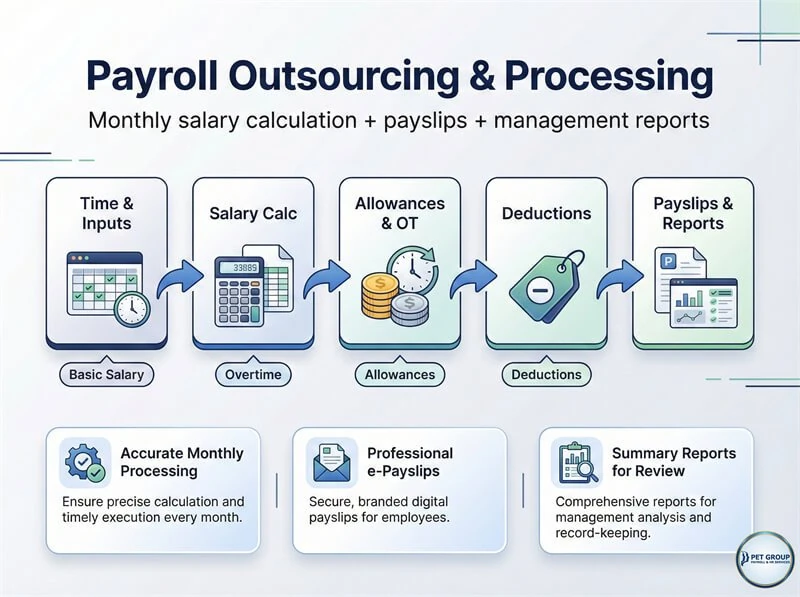
Where payroll complexity comes from
A restaurant group may consolidate approved hours from several outlets. A factory may process attendance exports and changing shift allowances. An office-based firm may have fewer time records but stricter confidentiality around bonuses. The right service scope starts with these differences.
Industry needs to discuss
| Industry | Typical inputs | Controls to agree |
|---|---|---|
| Food & beverage | Shift rosters, overtime and outlet changes | Named outlet approvers, attendance lock dates and outlet-level variance review. |
| Retail | Commissions, part-time hours and branch costs | Approved commission definitions, duplicate checks and branch-code mapping. |
| Manufacturing | Shift allowances, clocking records and workforce changes | Validated attendance exports, department-level overtime review and current employee classifications. |
| Construction | Site movements, allowances and project claims | Effective-dated site codes, approved claims and project cost allocation. |
| Professional services | Bonuses, confidential compensation and team costs | Restricted access, documented bonus approval and consistent department reporting. |
| Healthcare | On-call allowances and changing rosters | Approved duty records, clear allowance definitions and limited access to employee data. |
| Technology & startups | Frequent hires, expenses and changing teams | Payroll-ready onboarding, approved changes and scalable cost-centre definitions. |
| Education | Tutor hours, term changes and multiple campuses | Confirmed employment arrangements, approved teaching hours and effective-dated rates. |
An example: multi-outlet overtime
Each outlet submits one approved record for the defined attendance period. HR checks missing approvals and duplicate employees; the payroll review flags unusual changes by outlet. Finance can then distinguish a genuine staffing increase from an input error. This is an illustrative workflow, not a claim about a particular client outcome.
Prepare for a scope discussion
- Number of employees, locations, employing entities and pay frequencies.
- Work patterns, variable pay items and approval levels.
- Available attendance exports and HR records.
- Required branch, project or department reporting.
- Recurring problems such as late inputs or unclear adjustments.
See more payroll workflow examples or discuss Malaysia and Singapore payroll services.